


Artificial intelligence in elite sports is no longer something reserved for science labs or plans. It has gradually become an integral part of how elite teams train, plan, and compete every season. Early on, AI in elite sports focused on small tasks, but now sports technology supports nearly every layer of performance. AI Sports Analytics provides structure to data that once felt overwhelming, while AI in professional sports supports coaches, medical staff, and analysts in making informed daily decisions.
What this really means is that performance is no longer guessed. Patterns are studied. Movements are measured. Even rest is planned using data. Steady improvements, rather than dramatic jumps, shape the future of sports technology, making it more reliable and effective.
Within the first few minutes of learning about artificial intelligence in elite sports, it becomes clear that this shift is not about replacing people; rather, it is about augmenting human capabilities. It is about helping humans see more clearly.
Artificial intelligence in elite sports works by collecting information and learning from it over time. Sensors, cameras, and tracking systems gather data during training sessions and matches. This data is then processed using AI Sports Analytics tools that identify trends.
Let’s break it down simply.
AI in elite sports does not give commands. It gives suggestions. In AI in Professional Sports, final choices still depend on experience, instincts, and understanding of the human side of athletes.
Sports technology enables teams to review thousands of moments without manually watching every second. That saves time, though it does not remove the need for careful review.
Have A Look: How Social Media Is Changing the Game in Sports Marketing
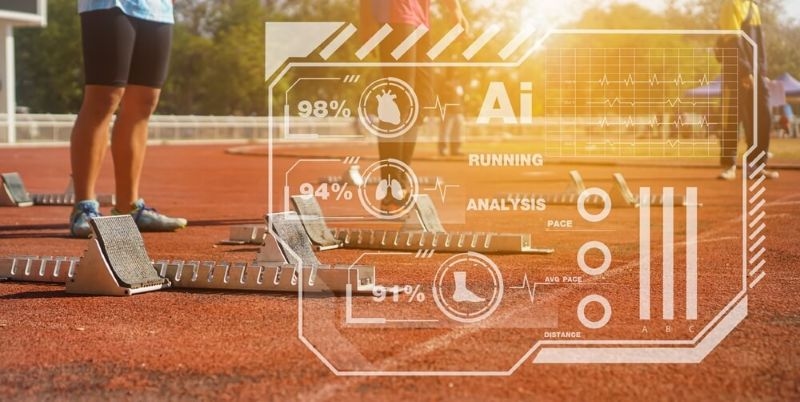
Sports technology has transformed how elite athletes train. Artificial intelligence in elite sports utilizes wearable devices to monitor heart rate, sleep quality, muscle strain, and fatigue. These signals help staff understand when to push and when to pause.
Common training benefits include
AI in top-end sport enables bespoke training based on the needs of the individual athletes. Both AI Sports & Analytics demonstrate how individual athletes' responses to training vary significantly. Even when the data is not complete, many trends still allow for a good guide.
In the future, sports technology will focus on balance. While winning is important, the health of sports professionals over a long season is much more critical.
AI in the sports industry helps teams develop a customized approach to their opponents, providing insight into the patterns of passing, movement, and decision-making as they unfold over time.
AI in sports analytics allows teams to:
While AI in professional sports is designed to provide coaches with insight into potential issues to address, the ultimate decision on how to address those issues remains with the coach. For instance, an AI system may show that a formation tends to struggle when pressured by the opposing team, but it is the coach who has the authority to implement changes.
Sports technology ensures a higher level of preparation for the teams involved; however, as with all sports participation, there will be gaps for unpredictability.
Injury prevention is one of the most valuable uses of artificial intelligence in elite sports. AI in elite sports monitors workload and stress signals that may lead to injuries if ignored.
Injury-related benefits include
AI Sports Analytics helps medical teams make cautious choices. AI in professional sports does not rush the recovery process. It fosters patience, even in the face of competition pressure.
The Future of Sports Technology places health alongside performance, not behind it.
Using Artificial Intelligence to Identify Talent in Elite Sports Is Changing the Way We Identify Talent. Enabling comparisons between regional players/teams while considering age and/or league-consistent metrics.
Examples of scouting support offered via AI include:
Artificial Intelligence Sports Analytics cannot replace traditional scouting methods for finding talent; rather, AI enables scouts/coaches to allocate their time and energy more effectively.
The future of technology and artificial intelligence in sports player scouting may provide an opportunity to remove bias from the scouting process; however, this is still determined by how technology is designed and utilized.
AI in professional sports aids decision-making during both training and competition. Artificial intelligence in elite sports offers scenario testing, enabling teams to simulate choices without incurring real-world risks.
Decision support includes
AI in elite sports provides options, not answers. Sports technology strengthens confidence, but responsibility still lies with the staff.
Here’s the thing: mistakes still happen. Data helps reduce them, not eliminate them.
Artificial intelligence in elite sports also affects fans, often without being noticed. AI in professional sports helps broadcasters select highlights, analyze plays, and present clearer visuals.
Fan-related improvements include
Sports technology helps fans understand what happens on the field. AI Sports Analytics makes complex plays easier to explain.
The future of sports technology may deepen fan understanding, not just entertainment value.
Artificial intelligence in elite sports raises ethical questions that cannot be ignored. AI in elite sports relies heavily on personal data, which creates responsibility.
Key concerns include
AI in professional sports must be used carefully. Sports technology should support fairness, not control outcomes.
The future of sports technology depends on trust between athletes, teams, and systems.
The future of sports technology is pointing toward a deeper integration of artificial intelligence in elite sports. Systems may improve prediction accuracy, though uncertainty will always exist.
Expected developments include
AI in elite sports will continue evolving slowly. Sports technology grows strongest when guided responsibly.
What this really means is progress without losing the human side of sport.
Must Read: Esports Explosion: How It's Dominating Mainstream Media
Artificial Intelligence in Elite Sports matters because it improves understanding across all levels of competition. Athletes gain insight into their bodies. Coaches gain clarity in strategy. Fans gain better explanations of the game.
AI Sports Analytics supports more thoughtful planning. AI in professional sports promotes long-term success. Sports technology connects all of these elements.
The value lies not in perfection, but in improvement.
Artificial intelligence in elite sports is reshaping training, health, strategy, and engagement. AI in elite sports works best when paired with experience and care. Sports technology and AI sports analytics will guide the future of sports technology through steady, thoughtful growth.
It refers to using intelligent systems to analyze performance data, support training, and improve decisions in high-level sports.
AI Sports Analytics identifies patterns and trends that enable teams to plan effective strategies and mitigate risks.
No, AI in professional sports supports humans by providing insights, while decisions remain human-led.
The future of sports technology will focus on health, fairness, performance balance, and more innovative use of data.
This content was created by AI